Build series · Game design
Game design.
Most people think gamifying an app means adding streaks, badges and a leaderboard. That is the salt and pepper. Here is the rest of the recipe, and how far RepGarden has got with it.
By Ahmed Gadir3 min read
One theme or story
The research found three of fourteen trainer apps with anything you could call a game layer, and every one of them is a scoreboard: streaks, badges, leaderboards. Those mechanics are fine. On their own they do not make an app memorable or make anyone want to open it when nobody is making them. So RepGarden's game design starts somewhere else.
The first thing that lifts any app is one theme, or one story, that ties the whole thing together: the name, the characters, the look, the sounds, the feel and the mechanics all pulling the same way.
Think about Space Invaders, the 1978 arcade game. Underneath, it is blocky shapes shooting at other blocky shapes. The story of an alien invasion is what made it stick, and even the shapes on screen were given a part in it: the invaders are drawn as sea creatures, the player is a laser cannon, the blocks are bunkers.
Chess is another good example. Pieces on a board, moved by rules, and the whole thing leans on a medieval battle: a king, a queen, knights and castles.
A carrot, and a name
For RepGarden, the image of a carrot getting more muscular at the gym made me laugh, so that is the theme. The name came with it: RepGarden, which has a nice ring to it. Gardening and fitness are both about growth, consistency and patience, and the whole experience will lean on that. Things grow when you turn up; they do not grow when you don't.

Benji gave a lot of freedom on this. A theme costs nothing to change at this stage, and it shapes every screen that follows.
The two places it gets used
The next question is where RepGarden actually gets used, because the place decides what the interface can be.
Clients will use the app at the gym, most likely between sets, or maybe on the commute there and back. So nothing busy: no menus inside menus, no complicated mechanics. It has to work with one hand, and it has to be minimal enough that it does not pull anyone away from their workout.
Trainers will use the web dashboard, and honestly, they probably do not want a gamified experience at all. It is a business tool for managing clients and workouts. The job there is to give them as little as possible to think about on top of what they already have to do.
The mechanics are still open
Next come the core mechanics: the goals, the rewards and the punishments. I am still working those out, and they will get their own entry once they are decided rather than guessed at here.
Three things that lift any app
Whatever the mechanics turn out to be, three things will apply to them, and they apply to anything you are building.
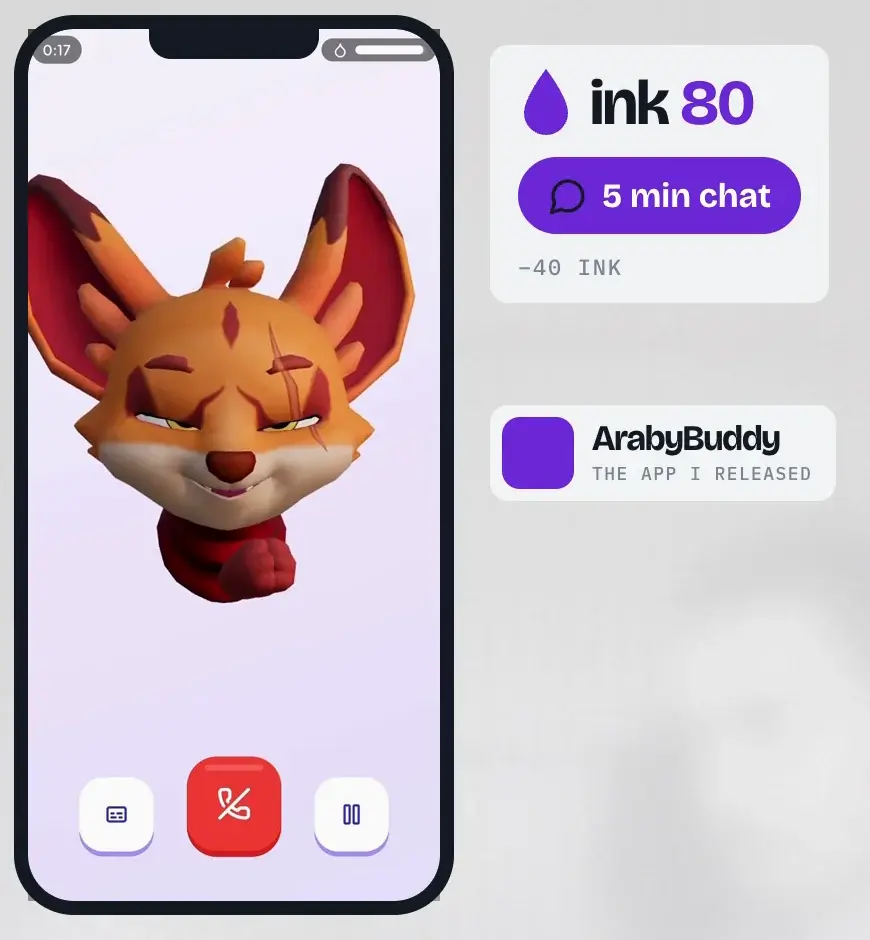
Rewards have to be spendable in the app, otherwise they are meaningless. Remember the Sonic the Hedgehog games? You race along a track collecting rings, and every 100 rings earns you an extra life, which you need when you come up against Dr Eggman. The rings are worth collecting because they buy something. Or take ArabyBuddy, the language-learning app I released: you earn ink as you complete lessons, and you spend that ink on minutes of real-time chat with an AI character to practise your Arabic. Rewards need to have meaning.
Personalisation goes a long way. People love being able to make something their own, and letting them does more for an app than most features.
Let users take a risk to win a bigger reward. Back to Space Invaders. Every so often a saucer flies across the top of the screen. The player can aim for it and score far more points than an alien is worth, but the cannon can only have one shot on screen at a time, so while that shot is on its way up, the aliens closer to them can take them out. The choice is the fun.
Where things stand
Decided: the theme and the name, and the two venues with what each one's interface has to be. Open: the goals, rewards and punishments, which the next game-design entry will settle. Nothing of the game has been built; these decisions are what the first screens will be drawn from. The thinking is in the RepGarden repository on GitHub.