- Product ideas
- Discovery
Not every idea needs an app
By Ahmed Gadir
Published
Summary
A mobile app is the right medium for some ideas and the wrong one for many. If your idea is about sharing information, is used at a desk or is only needed once, a website, a link or a document will serve people better and cost you far less. An app earns its place when the phone itself is part of the solution, or when the experience has to carry on between visits. Start with whatever solves the problem today, and expand when there is a reason to.
You have an idea, and the first thing everyone says is “you should make an app”. Before you do, it is worth asking whether the people using it would be better served by something else. Five questions settle it.
Building an app is a real commitment
A mobile app has to be tested on every kind of phone your users own. Every version you ship goes through review on the App Store and Google Play, and the app needs updating for as long as it lives, because the phones and the operating systems keep changing underneath it. A website has none of the store reviews and far less of the device testing, and a document has neither.
That work is worth doing when the app is the right answer. It is a waste when it is not, and the questions below tell the two apart.
1. Are you just sharing information?
If the goal is to teach, explain or give instructions, you most likely do not need an app. A PDF, a video, a checklist or a template does the job, nobody has to download anything, and you can change it tomorrow without a release. YouTube, Google Docs and Notion carry most of the world’s how-to material this way.
 YouTube
 Google Docs
 Notion
Start with content, not code.
2. Will people only use it at a desk?
If the main activity involves detailed work, big screens or long sessions, a website or a desktop tool makes a lot more sense. Nobody designs a logo on a phone. Figma, Photoshop and Excel are each serious products, and none of them began life as a mobile app, because the work they support happens at a desk.
 Figma
Being digital does not automatically mean being mobile.
3. Will people only need it once?
Think about how often someone will use your product. If they only need to fill in a form, book an appointment or look something up, why make them download anything? Give them a link they can open in the browser, as Calendly does for a booking. A download asks for a commitment that a one-off task does not deserve, and many people will refuse it.
 Calendly
Sometimes a link is all you need.
4. Does it need to work wherever people are?
Now we are getting somewhere. If the experience depends on location or movement, on the camera, on being used while commuting, exercising or travelling, or on working without an internet connection, the phone becomes part of the solution. Uber needs to know where you are. Strava needs to come running with you. Google Maps is useless on a desk.
 Uber
 Google Maps
 Strava
This is the first good reason to build an app.
5. Does it need to stay connected to someone’s life?
If people use the product throughout the day in short bursts, hear from other people through it, get updates that matter in the moment, or track something over weeks and months, that is a good reason too. WhatsApp, Duolingo and TikTok all live in the gaps of a day, and each one benefits from a notification that is personal to the user rather than broadcast to everyone.
 WhatsApp
 Duolingo
 TikTok
An app earns its place when the experience continues between visits.
Not everything needs to start as an app
A product can change medium as it grows. Reddit was a website for eleven years before it released its own apps, in 2016, after buying the third-party app Alien Blue in 2014. [1] As people got to know the product they wanted it in more places and in more ways, and once most of its readers were on their phones, an app made sense. It would not have made sense in 2005.
Start with what solves the problem today. Expand to other platforms when there is a reason to.
The question that matters
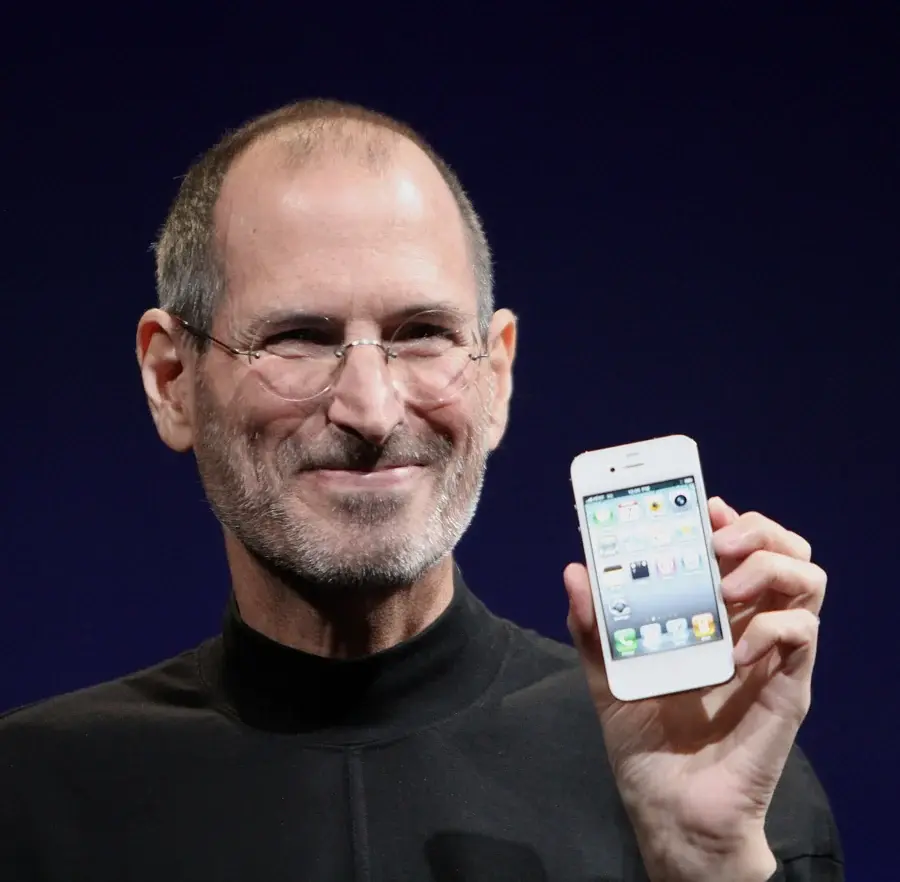
Steve Jobs put the order of thinking this way at Apple’s developer conference in 1997: “You’ve got to start with the customer experience and work backwards to the technology.” [2] Begin with the experience and where it is most suited, then choose the medium.
So stop asking “How do I turn this into an app?” and start asking “What is the best way to solve this problem?” It might be an app. It might be a website. It might be a PDF. Build whatever makes the most sense for the person using it.
If the answer is an app, the next decision is what goes into the first version of it. Deciding What to Build covers that, and the glossary explains the MVP, the smallest version worth launching.
Sources
Reddit — the official apps, 2016. Reddit launched on the web in 2005, bought the third-party iOS app Alien Blue in October 2014, and released its own iOS and Android apps on 7 April 2016. Reddit’s announcement of the apps.
Steve Jobs — WWDC 1997. The line comes from the closing question-and-answer session of Apple’s Worldwide Developers Conference in 1997, in reply to a developer’s criticism. The exchange on YouTube.
The photograph of Steve Jobs. “Steve Jobs Headshot 2010-CROP” by Matthew Yohe, licensed CC BY-SA 3.0, from Wikimedia Commons. Cropped.
